

The Evolution of the Customer Health Score and How AI Is Transforming Customer Success
In the world of SaaS and customer success, one question has always mattered more than any other. Are customers actually getting value from the product they purchased?
For years, companies have tried to answer this question through different types of customer health scores. These scores were designed to show whether an account was doing well or at risk. While the idea has always been valuable, the way health scores were built often relied on indirect signals rather than real outcomes.
Today, with the advancement of artificial intelligence, customer success teams are finally moving closer to measuring what truly matters. Customer results.
The Early Evolution of Customer Health Scores
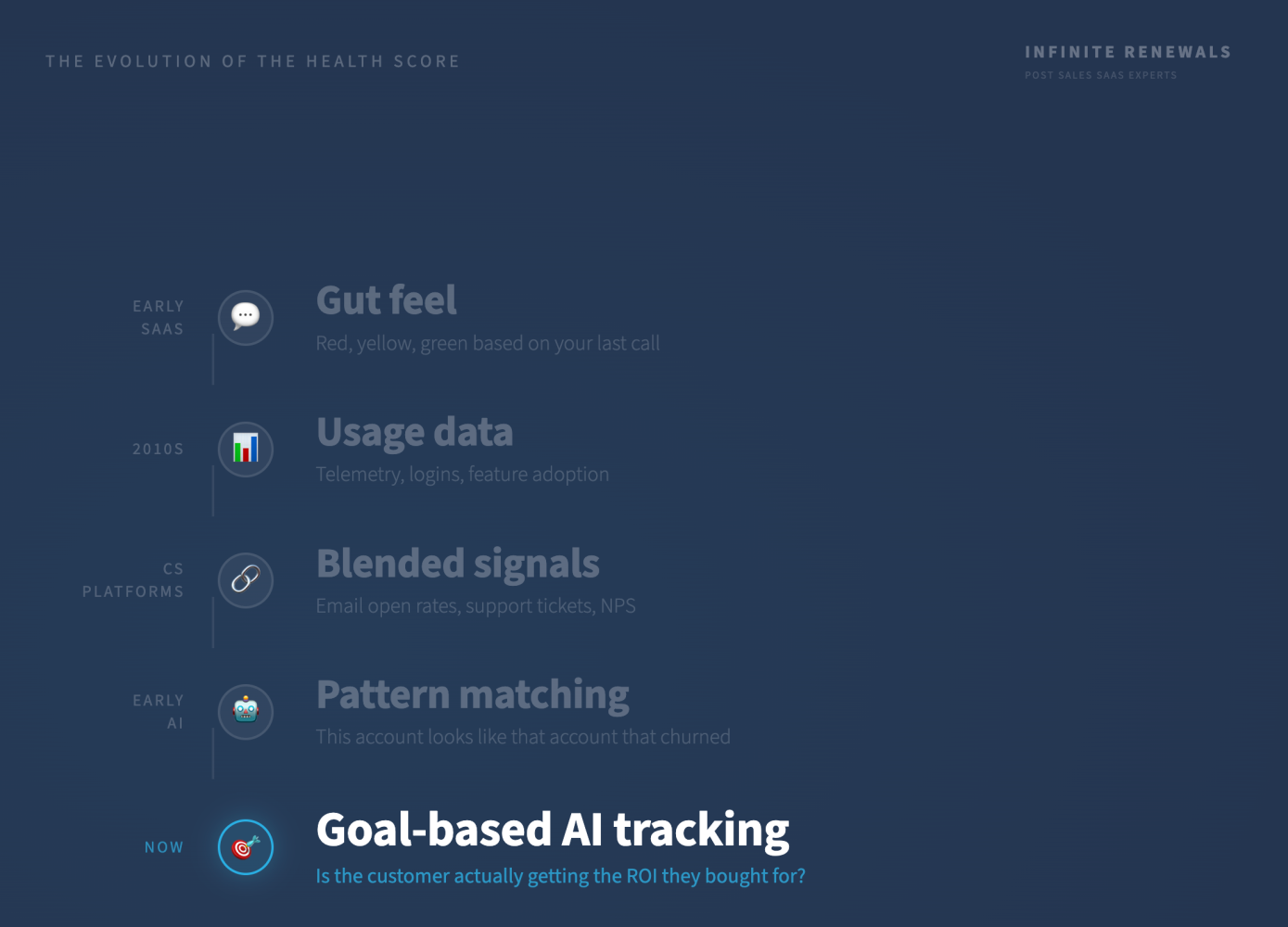
In the early days of SaaS, customer health scoring was largely based on intuition. Customer success managers would label accounts as healthy or at risk depending on how recent conversations with the customer felt. If the last call went well, the account was marked as healthy. If there were concerns, the account might be flagged for attention.
As SaaS businesses grew, companies began using product usage data to improve these assessments. Metrics such as login frequency, feature adoption, and activity levels became important signals for customer engagement. This approach brought more structure and data into the process.
Later, specialized customer success platforms helped organizations combine multiple signals into a single view. Platforms like Gainsight, Totango, and ChurnZero allowed teams to track product usage, support interactions, customer feedback, and engagement data from one dashboard.
These tools made customer success operations more organized and proactive. However, one challenge remained.
Most health scores were still measuring activity rather than actual value.
The Problem With Activity-Based Health Scores
Activity metrics are useful, but they do not always reflect whether a customer is achieving their goals.
For example, frequent product logins do not automatically mean a customer is seeing meaningful results. Similarly, lower activity does not always indicate dissatisfaction if the product has already delivered the intended outcome.
Customers ultimately judge software by the results it produces for their business. If the product does not deliver the outcome they expected, they may eventually cancel, regardless of their level of activity within the platform.
Because of this, many traditional health scoring systems struggle to accurately predict churn or long-term customer success.
How Artificial Intelligence Is Changing Customer Success
Recent advancements in artificial intelligence are helping customer success teams move beyond activity tracking. Modern AI systems can now analyze customer behavior in the context of specific goals.
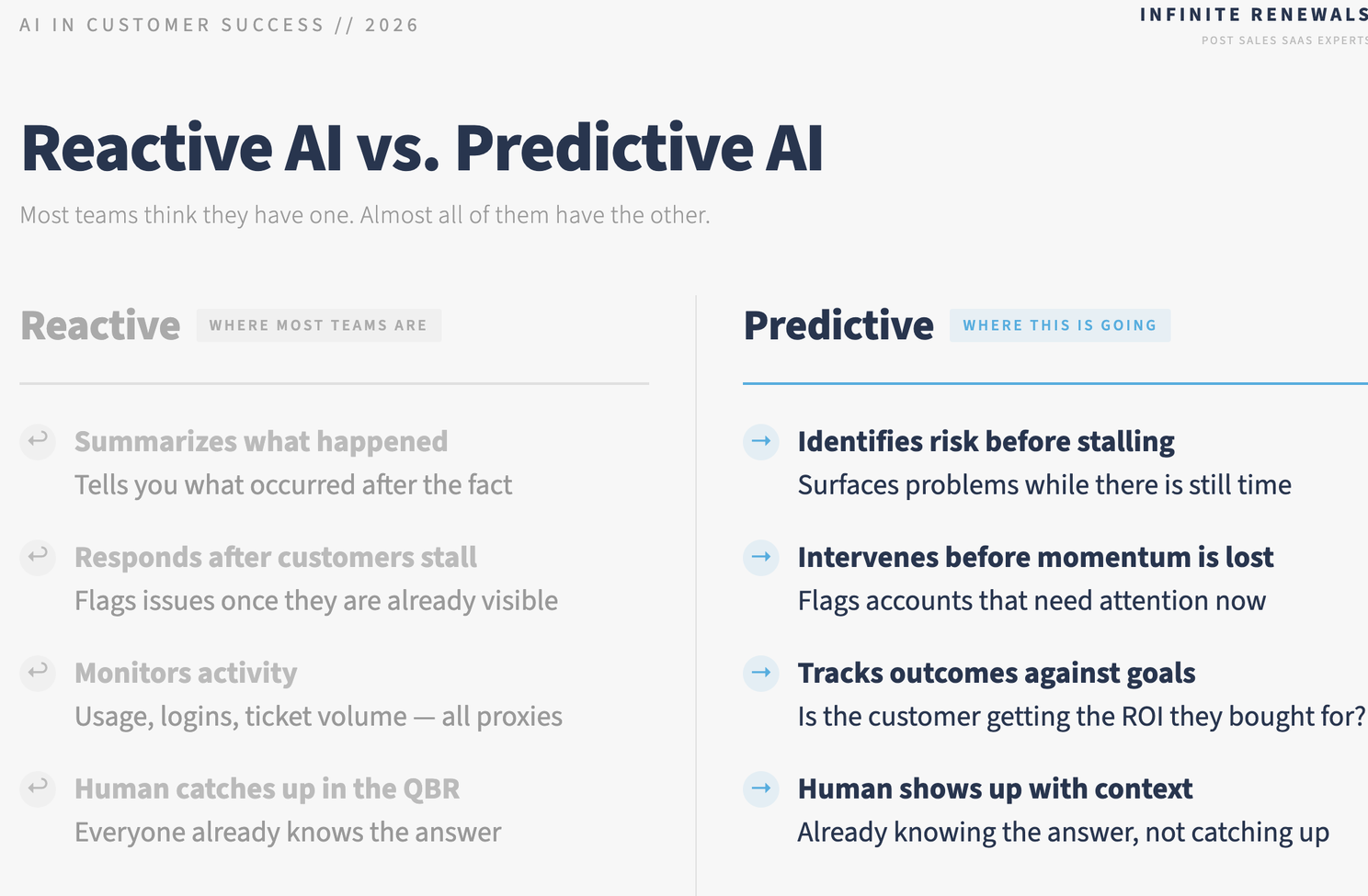
Research from OnRamp highlights how most companies are still early in this transition. A recent industry survey found that the majority of organizations still use AI primarily in reactive ways. In other words, their systems summarize past events rather than predicting future risk.
Predictive AI works differently. Instead of waiting for a problem to appear, it identifies early signals that indicate an account may be drifting away from its intended outcome.
The key factor that enables this type of prediction is goal-based tracking.
Why Customer Goals Matter More Than Activity
When companies clearly define what success looks like for each customer, AI systems can track whether progress is actually happening.
For example, if a company purchases software to improve payroll automation, the real measure of success is whether payroll processes are becoming more efficient. Simply measuring logins or feature clicks does not tell the full story.
Goal-based tracking allows teams to connect customer activity with the outcomes that originally motivated the purchase.
This creates a much more meaningful and accurate customer health score.
How AI Supports Customer Onboarding and Implementation
One area where goal based AI is already making a difference is in customer onboarding and implementation.
During the sales process, customers often explain their main priorities. However, these priorities are not always reflected in the standard onboarding workflow.
When artificial intelligence systems have access to these original goals, they can monitor whether implementation progress aligns with what the customer actually needs. If key steps related to the customer's main objective are delayed, the system can alert the team early.
This allows customer success managers to intervene before the project stalls or the customer becomes frustrated.
The Human Role in an AI Powered Customer Success Strategy
Artificial intelligence is a powerful tool, but it does not replace the human side of customer success.
Customers still want to speak with knowledgeable professionals who understand their business challenges and goals. What AI changes is how prepared those professionals can be.
Instead of spending time reviewing activity logs or analyzing dashboards before a meeting, customer success managers can rely on AI insights to quickly understand the state of the account.
This allows them to focus more on strategy, relationship building, and helping customers achieve real business results.
Building a More Effective Customer Health Score
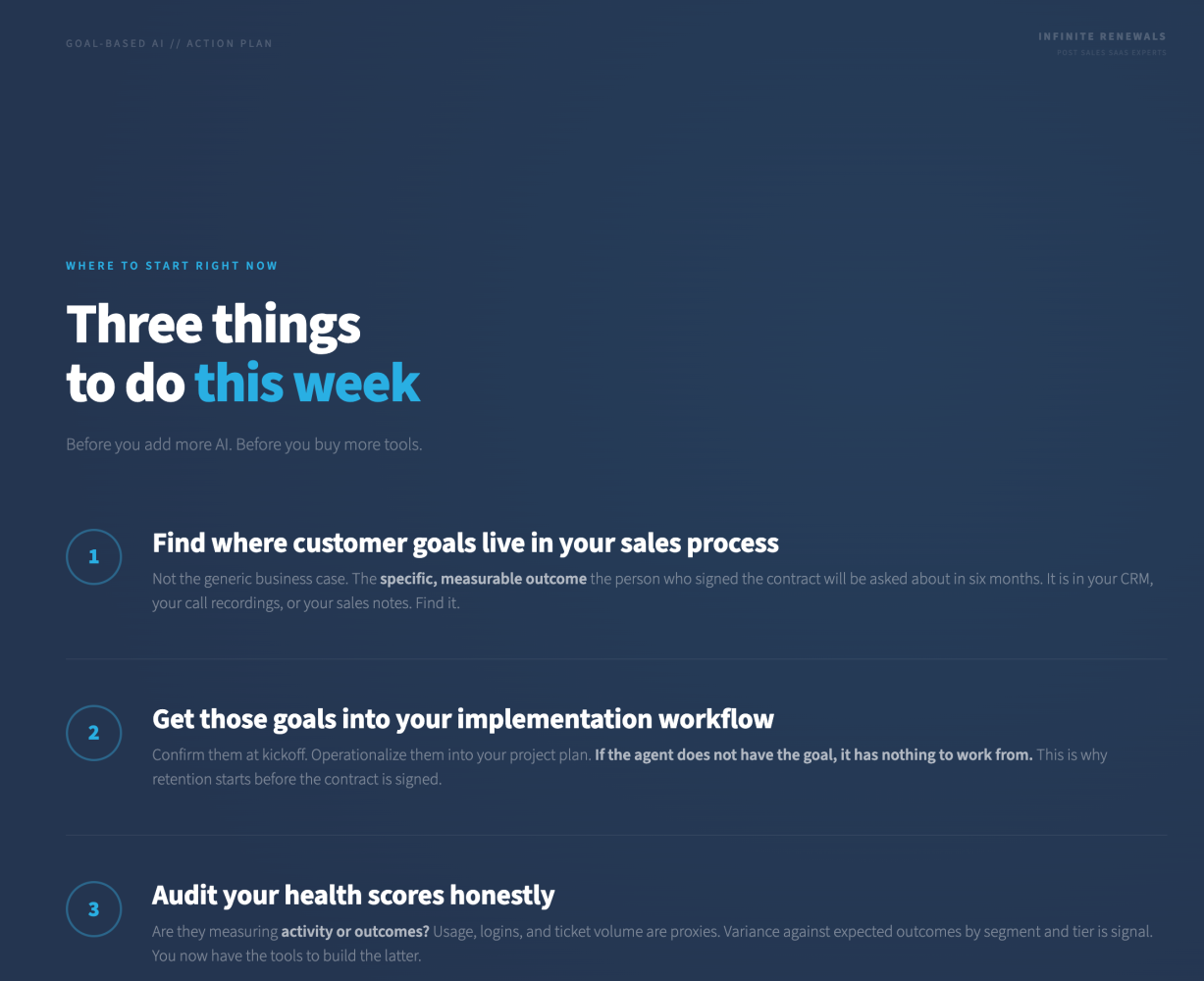
For organizations looking to improve their customer success strategy, the first step is capturing clear customer goals during the sales process.
These goals should be documented, confirmed during onboarding, and connected to measurable milestones throughout the customer lifecycle.
The next step is reviewing existing health scoring systems to determine whether they measure activity or outcomes. Shifting the focus toward outcomes creates a more accurate view of customer success.
Artificial intelligence can support this process, but only when it has clear objectives and reliable data to work with.
A New Chapter for Customer Success
Customer health scores have evolved significantly over the past decade. What started as simple intuition has gradually become a structured system supported by analytics and customer success platforms.
Now, artificial intelligence is enabling a new level of insight.
By focusing on customer goals and measurable outcomes, companies can move closer to understanding whether customers are truly successful with their products.
For SaaS organizations focused on long term retention, customer growth, and stronger relationships, this shift represents an important step forward in the evolution of customer success.